
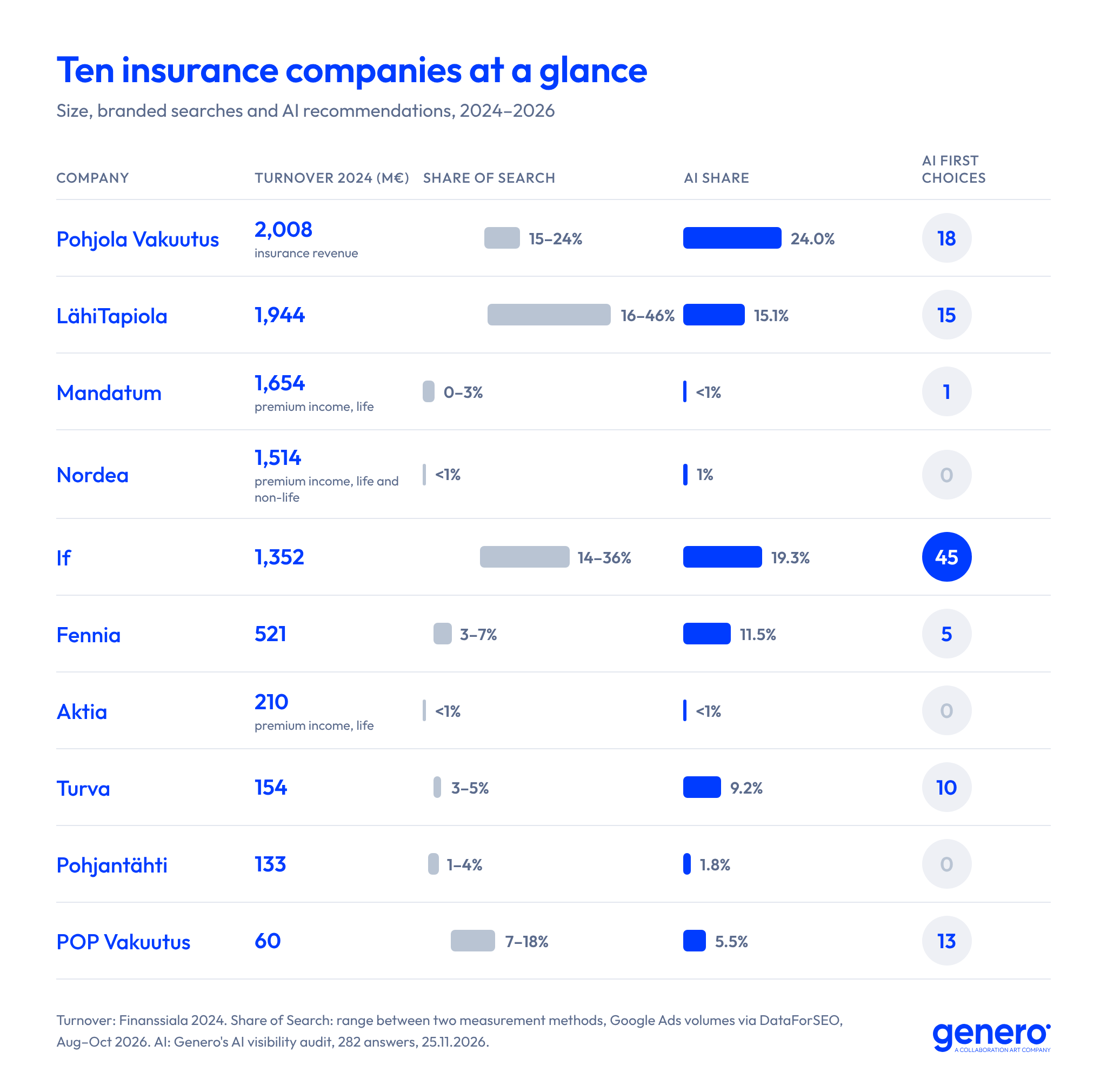
OP and Pohjola Vakuutus appear most often in AI answers, but If takes the top spot in recommendations. The company captures 42% of AI’s first choices, significantly more than its share of insurance-related Google searches. We compared the digital visibility of ten insurance companies from three perspectives: Google searches, AI answers and Meta advertising.
When Finns ask ChatGPT, Gemini and Claude about insurance, OP or Pohjola Vakuutus is mentioned in nearly nine out of ten answers. However, If takes a clear lead in recommendations: across 282 answers, AI recommends If as the first choice for insurance 45 times, compared to 18 times for Pohjola Vakuutus. If therefore captures 42% of all first choices, even though its share of branded searches is only 14–36%, depending on the measurement method.
Broken down by segment, the differences become even more pronounced. In non-life insurance, If captures about half of AI’s first choices, despite holding only about a fifth of the market. In personal insurance, Mandatum and Nordea are almost invisible in AI answers, even though they collect over half of Finns’ life insurance premiums.

“Insurance is one of those purchases where people like to compare options before deciding. Now AI does that work. It’s no longer enough for an insurer to be the biggest in the market. It has to be the choice that AI can justify.” – Sebastian Östman, Genero
It’s not enough for AI to know your insurance company. The goal is for it to recommend you.
Share of Search: the measurement method determines the leader
Insurers’ branded searches can be measured in two ways, painting very different pictures of the market. Looking at searches where consumers only use the company name, such as “lähitapiola” or “fennia”, LähiTapiola leads with a 46% share, Pohjola Vakuutus holds 15% and If 14%. Narrowing the scope to searches containing the word “vakuutus” (insurance), If takes the lead with 36%, Pohjola Vakuutus holds 24% and LähiTapiola 16%.
Neither method treats all companies equally. In branded searches for If, POP Vakuutus and Pohjola Vakuutus, the word “vakuutus” is a natural part of the search, whereas LähiTapiola and Fennia customers mostly search using just the company name. That’s why we present Share of Search as ranges rather than drawing conclusions from a single measurement method.
SEO: LähiTapiola leads in organic visibility, but If is catching up
Among companies focused on insurance, LähiTapiola has by far the highest organic visibility: an estimated 219,000 visitors reach its site via search engines every month, nearly three times as many as If. However, LähiTapiola’s number of ranking keywords fell by 151 last month, while If’s grew by 544 and POP Vakuutus’s by 274.
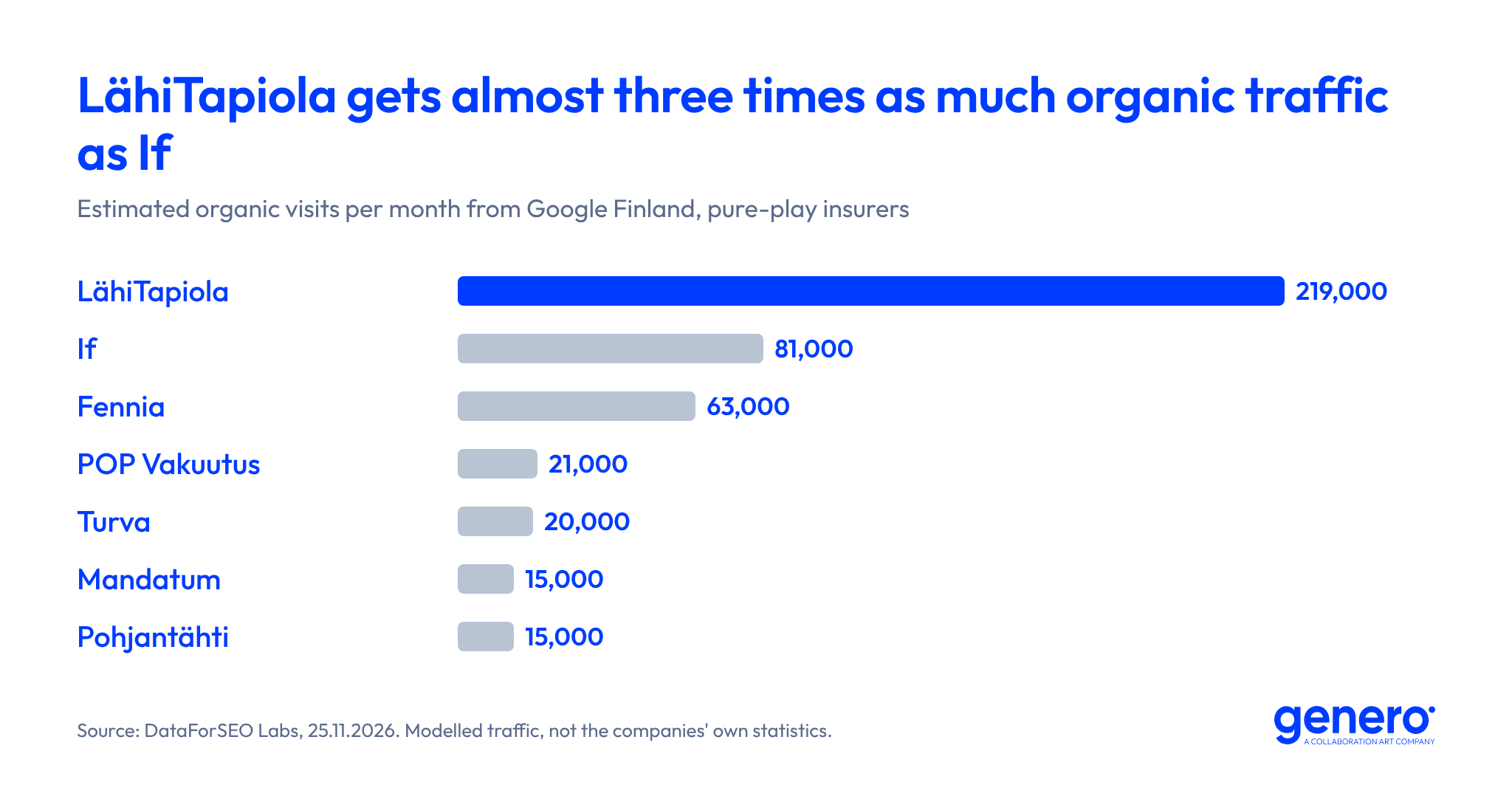
Fennia and Pohjantähti are visible for commercially valuable keywords with strong purchase intent. The figures for OP, Nordea and Aktia also cover banking services, so they are not directly comparable with those of the other insurers.
AI visibility: Pohjola Vakuutus is mentioned most often, If takes the top spot in recommendations
We asked ChatGPT, Gemini and Claude 62 questions about buying insurance across three measurement runs and received 282 answers. The results show that high visibility in AI answers does not guarantee a top spot in recommendations.
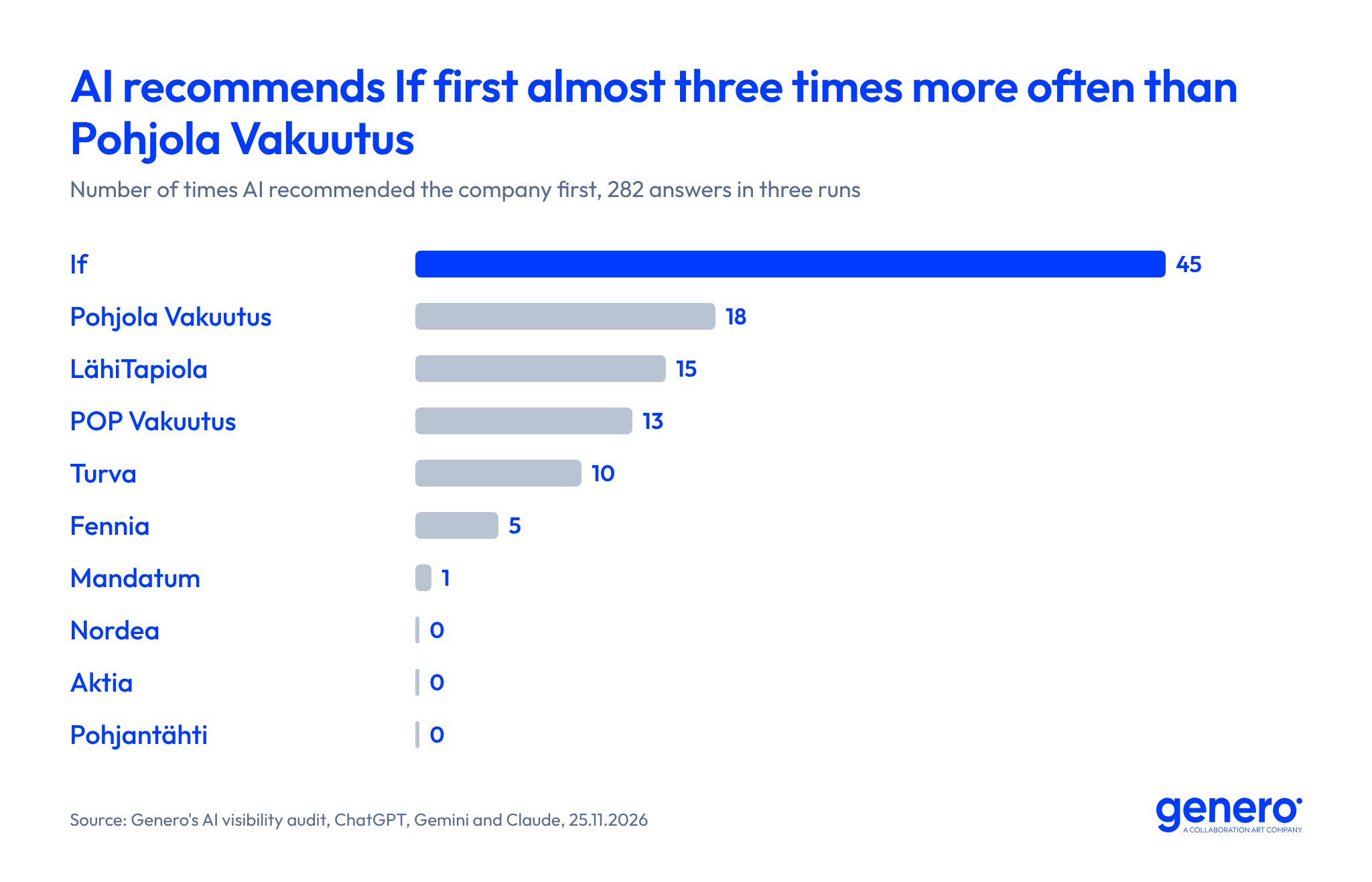
- Pohjola Vakuutus is mentioned in almost nine out of ten answers, but is AI’s first choice only 18 times. The figure combines mentions of OP, OP Pohjola and Pohjola Vakuutus, so some mentions may refer to OP’s banking services.
- If is the first choice 45 times. The company stands out especially in travel and pet insurance, and among families with children and young adults.
- Turva’s strength is trust. In the first measurement run, all its first choices came from questions about reliability, customer service and claims handling.
- POP Vakuutus, the smallest company in the comparison, gathers 13 first choices. AI also views it most positively of all the companies (sentiment 92/100).
Non-life insurance: If gathers half of AI’s recommendations
The differences are clearest in questions about home, car, travel and pet insurance. If gathers 15 of 29 first choices, about half, even though its market share is 22%. Market leader Pohjola Vakuutus has a 33% share, but AI recommends it first only three times.
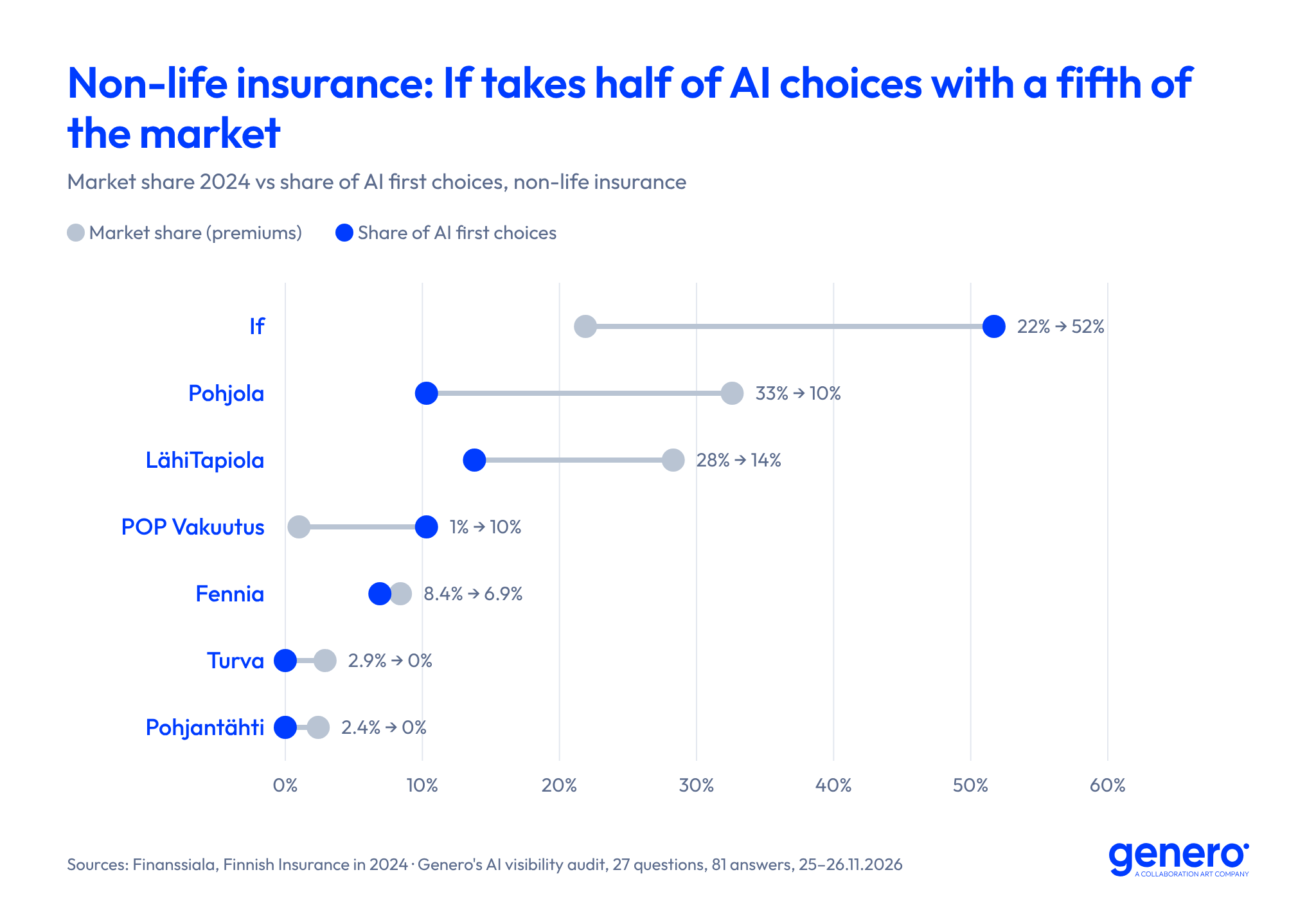
POP Vakuutus holds just one per cent of the non-life market, but gets as many first choices as Pohjola Vakuutus. In AI recommendations, a clear product offering can outweigh company size.
Personal insurance: AI recommends less often, life insurers take a back seat
In life, health, accident and child insurance, AI is clearly more cautious. It names a first choice in only about one in five answers, compared with one in three for non-life insurance.
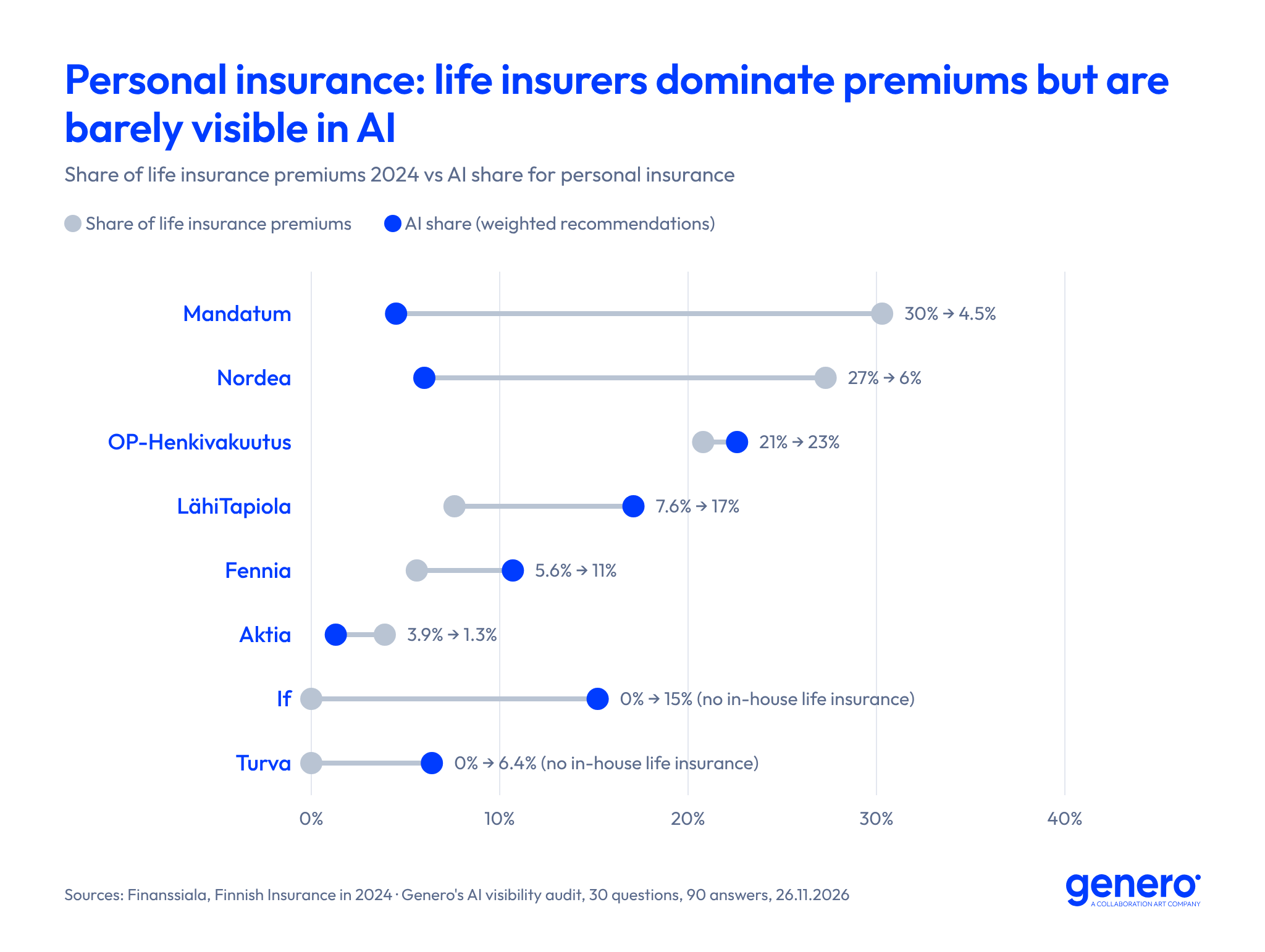
Mandatum and Nordea together collect over half of Finland’s life insurance premiums, but get only 4.5% and 6% of AI visibility. Their premiums come mainly from savings and investment insurance, while consumers’ questions to AI focus on protecting their family. If, meanwhile, ranks third in AI visibility for personal insurance thanks to its health and accident insurance, even though it has no life insurance operations of its own in Finland.
Demand and AI recommendations don’t go hand in hand
If captures 42% of AI’s first choices, even though its share of branded searches is 14–36% depending on the method. We call the difference between these figures the AI Choice Gap: how much a company’s share of AI first choices differs from its Share of Search. For If, the gap is 6–28 percentage points in favour of recommendations.
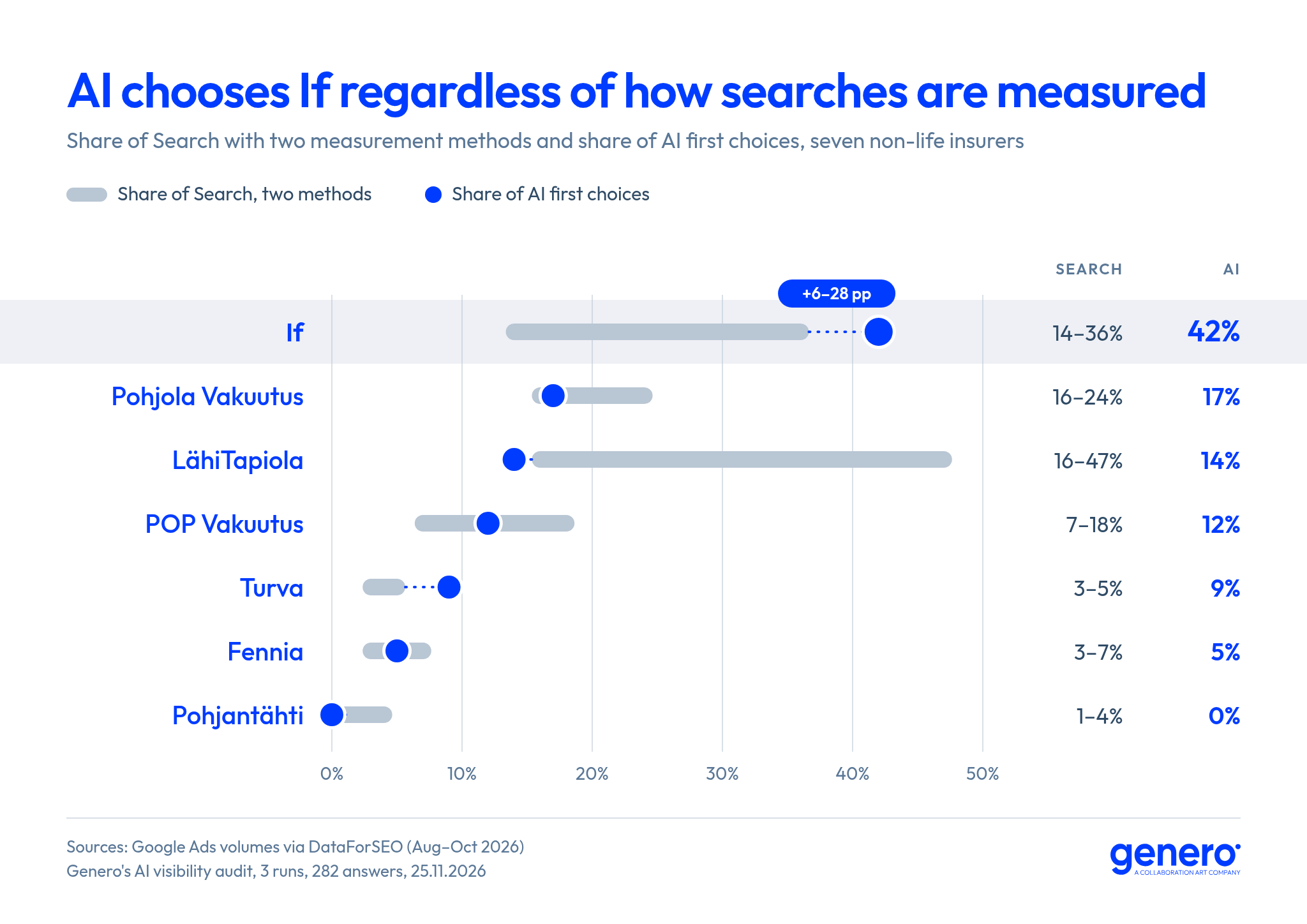
For the other companies, the results depend on the method, so we report the figures but don’t draw firm conclusions from them.
Which insurers does AI recommend to different target groups?
We looked at AI’s recommendations through five buyer profiles. If leads or shares the lead in four out of five target groups, but other companies have clear strengths too.
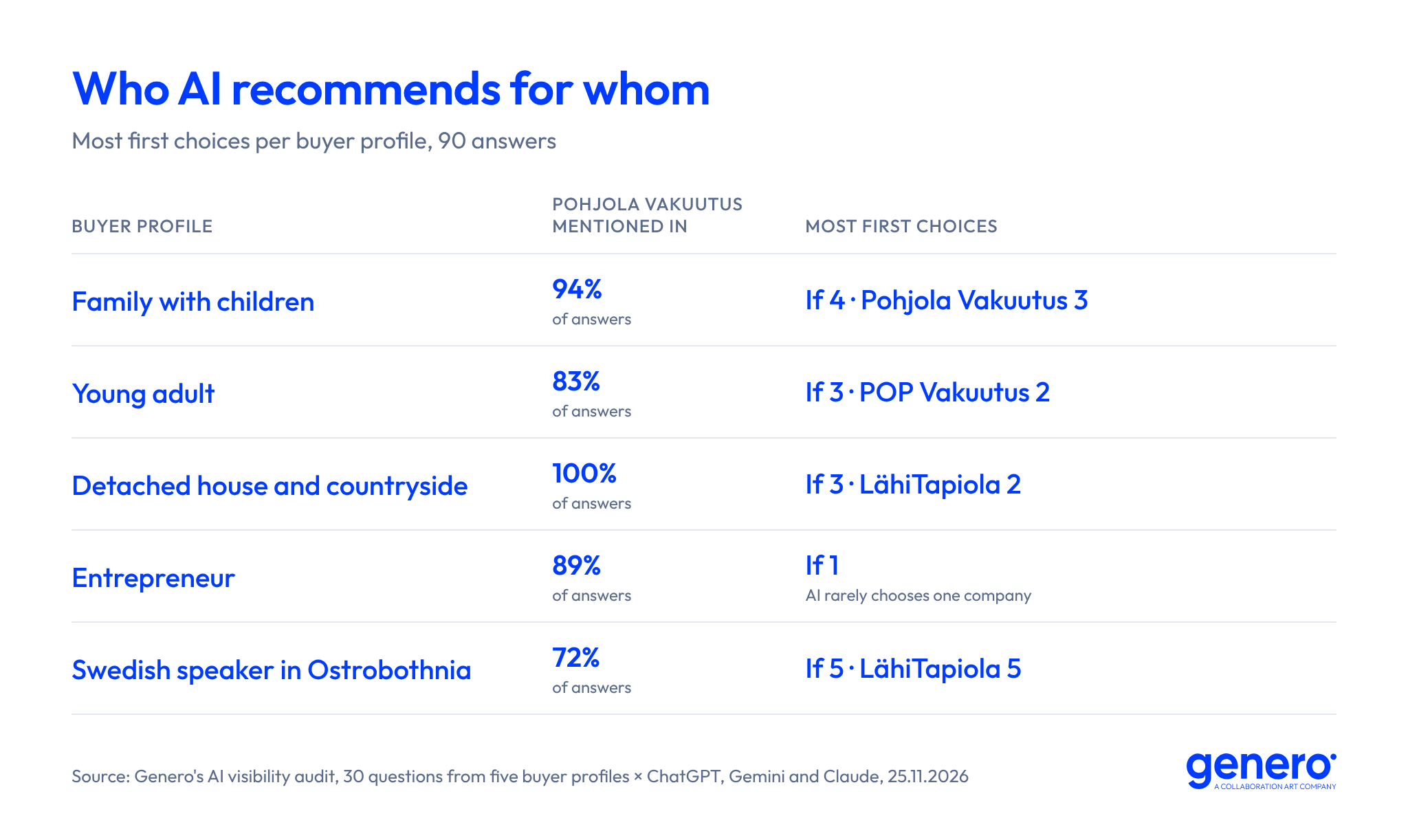
- Young adults: Pohjola Vakuutus is mentioned in most answers, but AI never recommends it first. If and POP Vakuutus receive the most first choices.
- Families with children: Pohjola Vakuutus appears in almost all answers and competes evenly with If for first choices.
- Rural homeowners: Pohjola Vakuutus is mentioned in every answer, but If and LähiTapiola lead in first choices.
- Swedish speakers in Ostrobothnia: LähiTapiola is particularly strong in this group and shares the top spot with If.
- Entrepreneurs: No insurer has established itself as AI’s clear favourite, so there is still room to stand out.
Comparison sites steer AI’s answers
Two out of three links in AI answers lead to external sites rather than the insurers’ own pages. Of the companies’ own sites, If’s pages are referenced 47 times and LähiTapiola’s 27 times, even though LähiTapiola has almost three times the organic traffic. Comparison sites such as valitsevakuutus.fi and kotivakuutuslaskuri.fi account for about a fifth of all source references.
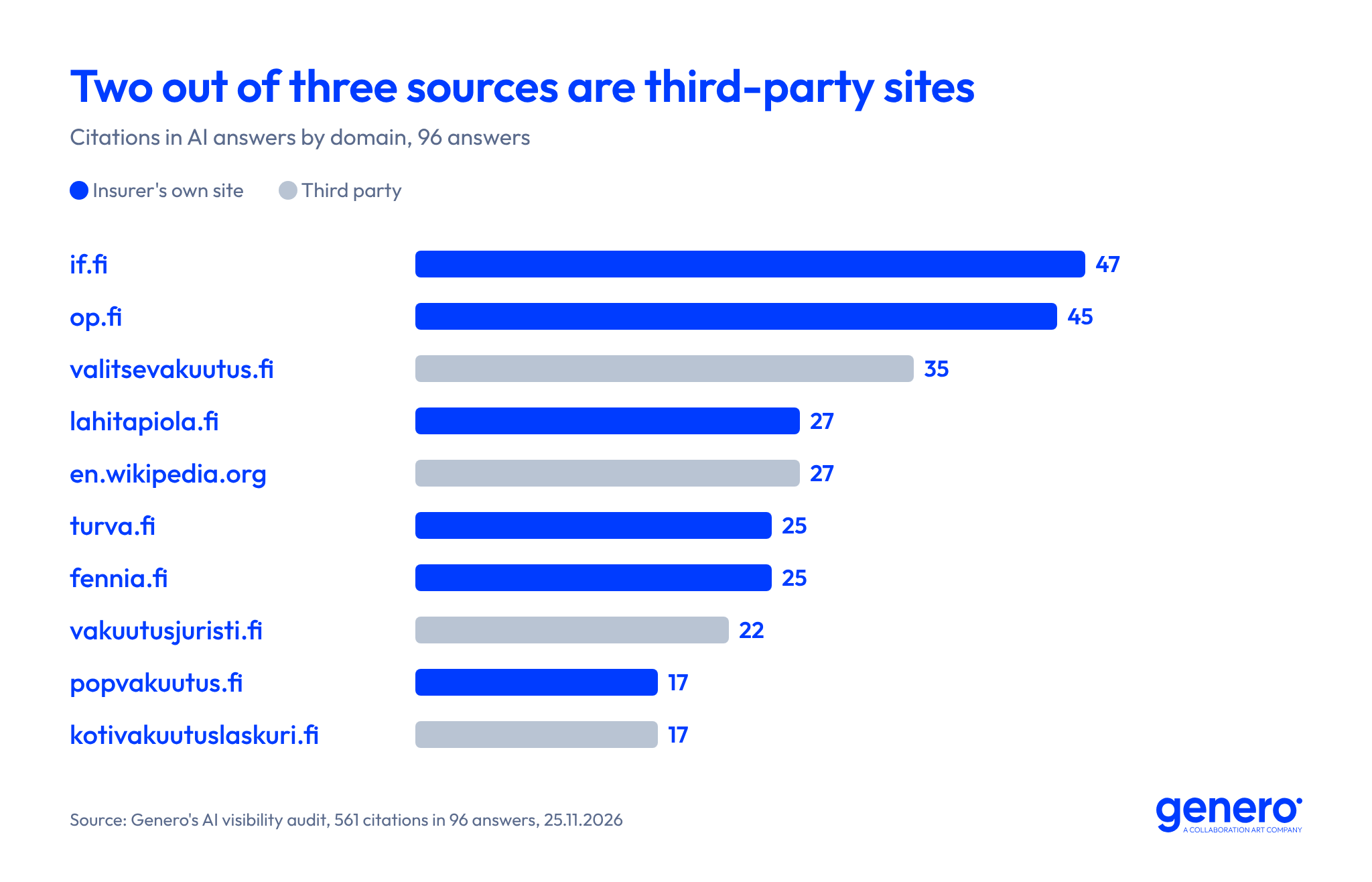

“AI uses information that is easy to verify: prices, policy terms and independent reviews. If the information can’t be found on the company’s own site, AI fetches it from elsewhere. Then a comparison site, for example, determines the picture AI gives of the company.” – Jonathan Björkskog, Genero
Meta advertising: how do insurers attract customers?
We reviewed the active ads of OP Pohjola, LähiTapiola, If, Fennia, Turva and POP Vakuutus in the Meta Ad Library on 25 November 2026, focusing on messaging and creative solutions.
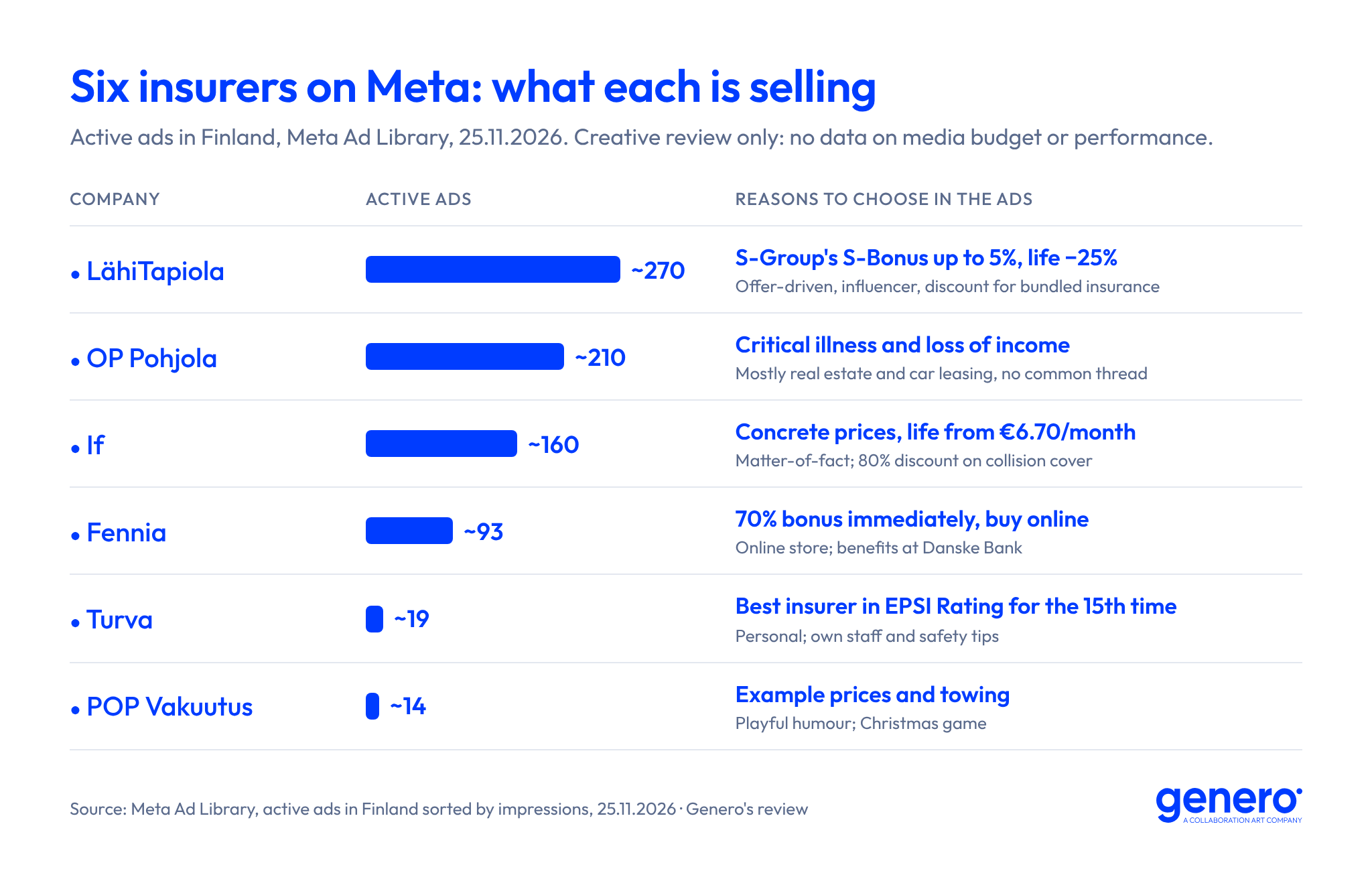
- Fierce competition for life insurance. Life insurance is prominent in the advertising of LähiTapiola, If and Turva. OP Pohjola’s few insurance ads focus on critical illness and loss of income.
- Customer and membership benefits are key selling points. LähiTapiola attracts customers with the S Group Bonus, Fennia with Danske Bank’s customer benefits, and If and Turva with trade union membership benefits.
- Pohjola’s advantage in AI isn’t reflected in its ads. For example, the tenfold OP bonus on home and car insurance for owner-customers isn’t used in the reviewed Meta ads.
- Turva’s messaging emphasises trust. The company has only 19 active ads, but they repeat the same strength that AI highlights: customer satisfaction.
Brand positioning: four ways to stand out in the insurance market
If and Pohjola Vakuutus build their position on scale. LähiTapiola, Turva, Pohjantähti and Fennia emphasise mutual ownership and customer proximity. POP Vakuutus competes on simplicity and price, while Mandatum, Nordea and Aktia sell life insurance and savings as part of a banking relationship.
The messages of the four mutual insurers are very similar. Turva stands out by offering concrete proof of its customer satisfaction.
“The companies that succeed in AI recommendations have one thing in common: a concrete, easily repeatable reason to choose them. For If, it’s price; for Turva, the EPSI results; and for POP Vakuutus, simplicity. It’s essentially good old positioning, but now AI is interpreting the message too.” – Sebastian Östman, Genero
What does all this mean for insurers?
- Offer concrete reasons to choose your company. Prices, bonus percentages and independent research results are data AI can easily use in its recommendations.
- Stand out in a specific insurance category or target group. Turva stands out for reliability, If in travel insurance and among families with children. There is still room to stand out in insurance for entrepreneurs.
- Build a consistent brand image across channels. Turva’s strength is consistency: the same advantages appear in both its Meta advertising and AI answers.
- Be visible where AI looks for information. Comparison sites, consumer guides and independent studies are an important part of building AI visibility.
- Talk about customer needs, not just products. Life insurers’ strong position in savings and investment doesn’t automatically translate into AI visibility when consumers look for ways to secure their family’s finances.
- Look at demand, visibility and recommendations side by side. Good search visibility or high branded search volumes don’t tell you which company AI recommends. Use several measurement methods so the overall picture isn’t distorted.
In brief
of AI first choices go to If, even though its share of branded searches is 14–36%
of life insurance premiums go to Mandatum and Nordea, but their combined share of AI visibility for personal insurance is only about 10%
of the sources AI uses are external sites rather than the insurers’ own websites
How visible is your insurance company on Google and in AI answers?
Is your company one of the ten insurers in the analysis? We’d be happy to go through your company’s results with you and discuss the opportunities they offer for developing your marketing.
Get in touch using the form below or on LinkedIn: Sebastian Östman / Jonathan Björkskog
"*" indicates required fields
How we measured
- Share of Search: estimated monthly search volumes in Finland from Google Ads via DataForSEO, August–October 2026, measured in two ways. Method A: company names as people search for them; for bancassurers, only insurance-related terms. Method B: for all companies, only searches containing the word vakuutus. Branded searches also include existing customers logging in.
- SEO: DataForSEO Labs estimates for Google Finland, 25 November 2026. Traffic is modelled, not the companies’ own statistics.
- AI visibility: Genero’s AI Recommendation Visibility audit, 25–26 November 2026. Five runs with ChatGPT (OpenAI), Gemini and Claude with web search, totalling 417 answers in Finnish and Swedish. The overall figures (62 questions, 282 answers) come from the first three runs; two additional runs go deeper into non-life and personal insurance. Each company is scored by role (first choice 4, strong alternative 3, mention 1, negative −1) multiplied by an engine weighting (OpenAI ×3, Gemini ×2, Claude ×1). Mentions of OP, OP Pohjola and Pohjola Vakuutus are combined. Results are indicative.
- Segments: non-life insurance 27 questions (81 answers), personal insurance 38 questions (114 answers). Market shares: Finanssiala, Finnish Insurance in 2024. Of life insurance premiums, 88% come from unit-linked insurance and capitalisation agreements.
- Meta ads: active ads in Finland in the Meta Ad Library on 25 November 2026. The library does not show media budgets or results.
Sources
- Finanssiala: Finnish Insurance in 2024 (PDF)
- OP: OP bonuses on insurance will increase more than tenfold in 2026
- Genero’s AI Recommendation Visibility audit, DataForSEO and Meta Ad Library, November 2026
About the authors

Sebastian Östman
Sebastian Östman is a co-founder of Genero and an investor. He focuses on growth and AI-driven commercial development, and lives in Ostrobothnia.
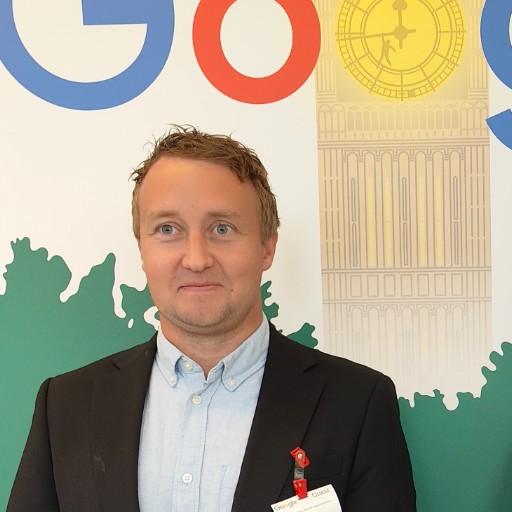
Jonathan Björkskog
Jonathan Björkskog is a Principal Growth Consultant at Genero. He has worked with search engine optimisation since 2009 and now focuses on AI search (GEO), marketing budget planning and AI-powered marketing.